


This article looks at how two postsecondary educators changed their courses after attending an assessment workshop that emphasized the use of “backward design” for course planning and alignment. It also discusses next research steps needed to support educators in designing fair undergraduate assessments and courses.
Score:
The ExIST Project is a teacher professional development model that supports middle school biology teachers to adapt curriculum by integrating game design to enhance biological systems learning and skills in systems thinking from constructionist and participatory perspectives.
Score:
MPACT provides opportunities for students to engage in computational thinking, spatial reasoning, and mathematical concepts through design and hands-on making projects.
Score:
A collection of photographs created by Native students and professionals features supports and barriers they experience in STEM. The exhibition is part of an NSF-funded study that also includes quotes by participants to contextualize the images.
Score: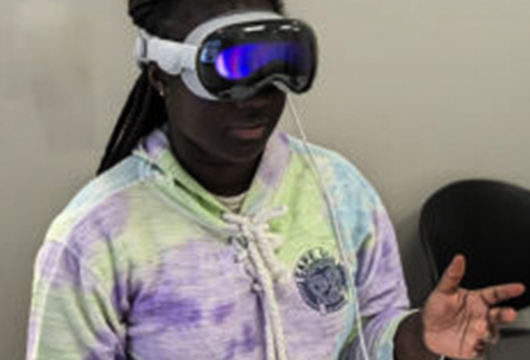
Using augmented reality tools to help students with executive function issues attend to STEM related tasks.
Score:
Don’t miss these informative session.
Score:
The Cesar Chavez Foundation and TERC organizations will work with youth and afterschool leaders in partnership with Riverside County Office of Education and Merced City School District in California, to co-design afterschool projects that draw on students’ desire to help others while growing positive identities as mathematics learners — with the ultimate goal of reaching 100,000 students across the Southwestern U.S.
Score:
This study was designed to help address these gaps in the literature and contribute to a deeper understanding of the factors and processes that shape STEM-related interest development for preschool-age children and their families.
Score: